

















Introduction: The RMiT Paradigm Shift
As financial institutions become increasingly dependent on digital platforms, technology providers and interconnected systems, technology risk is no longer simply an IT concern. A system outage, cyber incident or third-party failure can quickly affect customers, operations and regulatory standing.
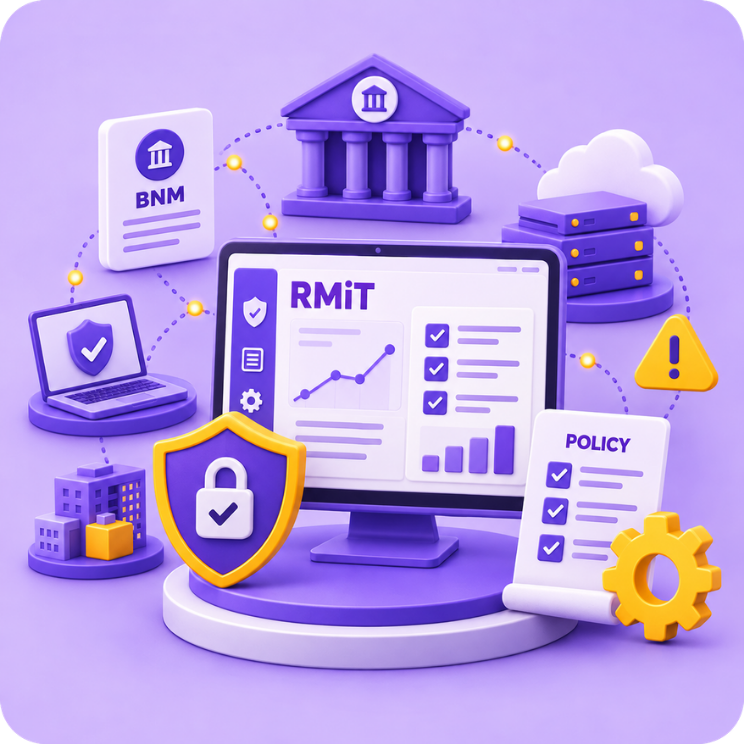
Bank Negara Malaysia's revised Risk Management in Technology (RMiT) Policy Document, issued on 28 November 2025, reflects this critical shift. The revised framework strengthens expectations around technology and cyber risk management, service resilience, digital-service security and the secure adoption of new technologies. It also expands applicability to certain non-bank Merchant Acquirers and Intermediary Remittance Institutions.
More importantly, the regulatory direction of RMiT points towards a decisive change: moving from static annual compliance checklists to an active, continuous approach to technology governance.
Explicit coverage for critical non-bank merchant acquirers and remittance intermediaries.
Shifting from paper disaster recovery plans to demonstrable, verified operating resilience.
Direct linkages from regulatory rules to risk scenarios, controls, owners, and closure evidence.
From Technology Compliance to Operational Resilience
Technology now sits at the absolute centre of financial-service delivery. As a result, maintaining system availability and recovering effectively from disruption have become foundational board and executive governance responsibilities.
Bank Negara Malaysia has highlighted that increased dependence on digital technology and shared systems directly amplifies exposure to cyber incidents, unscheduled outages, and cascading technical failures. The revised RMiT requirements are intended to substantiate institutions' security and operational safeguards against these exact threats.
Financial institutions across Malaysia have been implementing these revised expectations, accompanied by BNM conducting targeted supervisory reviews of business continuity arrangements for critical customer-facing services.
Regulatory Expectation: Active Verification vs. Paper Plans
Resilience can no longer exist solely as an archival policy document or an untested Disaster Recovery binder. Financial institutions need continuous visibility into whether critical controls are operating effectively in production, where control deficiencies exist, and how swiftly identified issues are being remediated.
Third Parties Add Another Layer of Risk
Financial institutions increasingly rely on technology vendors, cloud service providers, specialized software partners, and fintech platforms.
While these external relationships create operational efficiency and unlock rapid innovation, they also extend the institution's technology-risk environment far beyond its own physical and logical perimeters.
This reality makes periodic, once-a-year vendor questionnaires increasingly insufficient on their own. Under the revised RMiT regime, mature third-party governance demands continuous clarity across four critical dimensions:
Critical Service Support
Clear mapping of which external providers support core banking, payment routing, and customer-facing channels.
System & Data Access
Detailed visibility into vendor API gateways, privileged network credentials, and confidential customer data repositories.
Control Effectiveness Drift
Continuous tracking to verify that agreed security baselines and SLAs remain active between annual audit cycles.
Fourth-Party Dependencies
Uncovering hidden supply chain vulnerabilities where primary providers rely on subcontractors or offshore hosting.
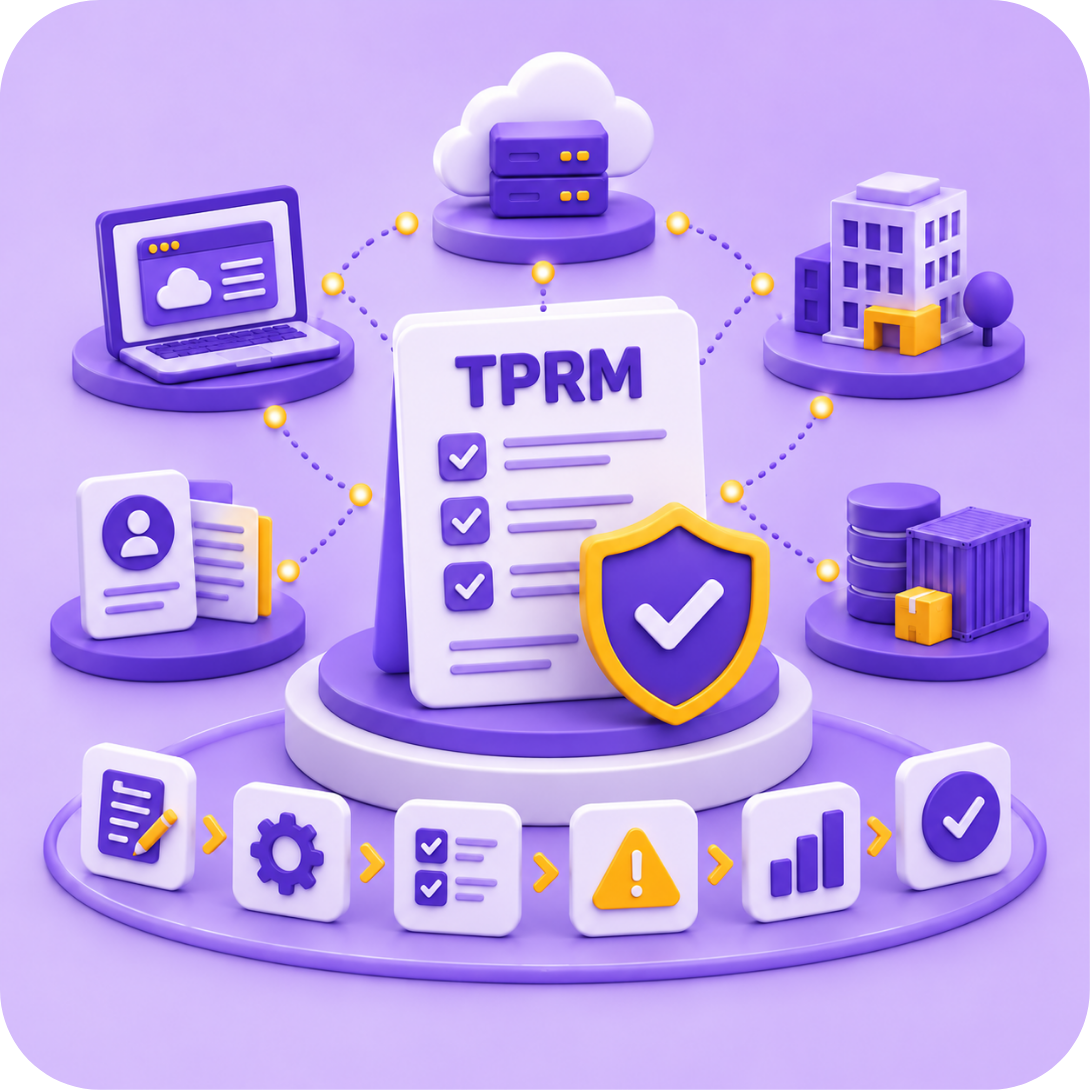
Third-party risk management (TPRM) must therefore become an integral part of the enterprise technology governance framework—rather than an isolated procurement or legal exercise.
The Compliance Challenge Is Visibility
One of the greatest operational hurdles with RMiT is not merely reading or understanding the regulations. It is maintaining ongoing visibility over compliance across disparate teams, tools, and systems.
In many institutions today:
• Technology infrastructure risks sit siloed within IT Operations.
• Cyber controls and threat monitoring sit with Information Security.
• Third-party evaluations are managed separately in procurement or compliance folders.
• Compliance evidence is scattered across shared drives, spreadsheets, and emails.
• Assessment findings and remediation commitments are tracked across disconnected issue tickets.
For RMiT governance to satisfy supervisory scrutiny, regulatory requirements must be translated into clear, real-time operational indicators: assigned ownership, testing status, evidentiary substantiation, periodic review cycles, and remediation progress.
The Critical Distinction in Modern Governance
A policy file can state what an organisation should do. Effective governance must be able to demonstrate what is actually being done, prove who is accountable, and substantiate whether identified deficiencies are being closed with verified evidentiary artefacts.
Moving Towards Continuous Technology Governance
A defensible RMiT framework connects every regulatory obligation into a seamless, unbroken chain of operational custody:
The Problem: Checks occur once a year; control failures and configuration drift remain undetected until an incident or regulator audit exposes them.
The Outcome: Unifies every BNM expectation with designated custodians, automated testing signals, and live remediation tracking.
When these relationships are visible across the enterprise, institutions can move decisively beyond asking whether a requirement has merely been noted on paper.
They can detect posture changes instantly, identify control gaps earlier, assign clear internal accountability, track remediation progress in real time, and maintain defensible evidence as part of daily operations.
This continuous posture is particularly urgent because the supervisory landscape does not stand still. Bank Negara Malaysia's RMiT Frequently Asked Questions were most recently updated on 1 July 2026, reinforcing the mandatory expectation that institutions maintain an active, living governance model rather than a static compliance archive.
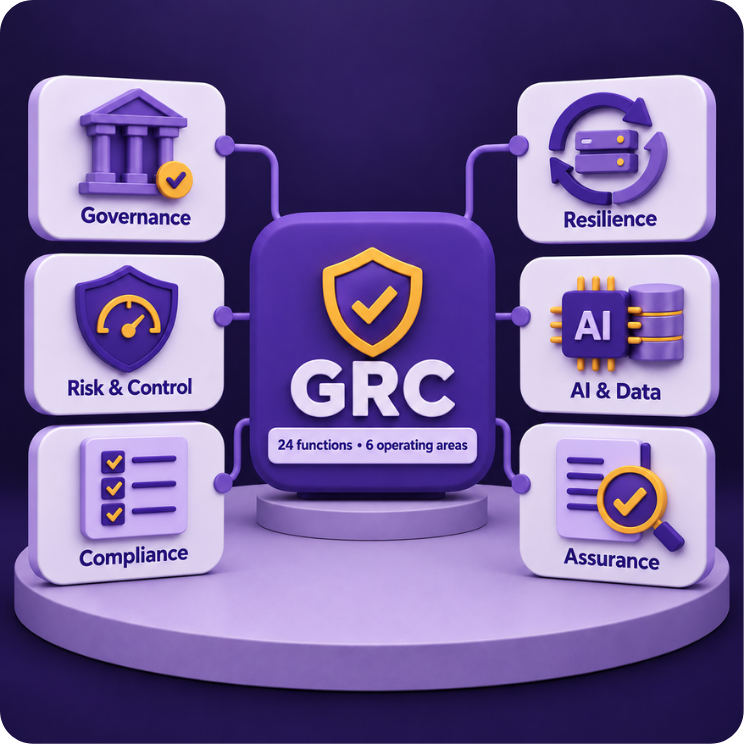
Supporting RMiT Governance with Kollect*AI GRiC
This is where Kollect*AI GRiC provides the unified infrastructure required to execute continuous technology risk management.
Instead of managing BNM requirements, operational risks, cyber safeguards, vendor reviews, evidentiary files, and remediation commitments through disconnected tools, GRiC establishes an authoritative, common system of record.
Defensible Technology Risk Infrastructure
Kollect*AI GRiC provides financial institutions with structured control ownership, continuous monitoring, and automated evidentiary trails tailored for BNM RMiT compliance.
Maintains structured accountability across board forums, management committees, and operational custodians.
Tracks audit deficiencies, action plans, and closure artefacts with contractual deadlines and owner attribution.
Monitors changing risk profiles, configuration drift, and third-party dependencies between scheduled reviews.
Logs all actions, reviews, and sign-offs with cryptographic timestamps ready for BNM supervisory inspection.
The purpose of Kollect*AI GRiC is not to replace human regulatory expertise or executive discretion. It is to provide the operational backbone that empowers institutions to organise, monitor, and demonstrate their governance activities with unassailable clarity.
Final Thought: Compliance Must Be Demonstrable
The revised RMiT framework reflects an epochal shift across the financial sector: technology risk has become completely inseparable from operational resilience, customer trust, and executive accountability.
For boards, risk committees, and technology leaders, the central question has fundamentally changed. It is no longer:
“Do we have the required policies and control documentation on file?”
Instead, the decisive regulatory question is:
Can we demonstrate that those controls are actively functioning, prove that weaknesses are being systematically resolved, and provide executive leadership with continuous, verified visibility over our enterprise technology risk?
“True governance is not about compiling documentation for an annual audit. It is about actively proving operating resilience every single day.”
Align Your Organisation with BNM RMiT
Discover how Kollect*AI GRiC establishes continuous technology risk oversight and audit readiness.